
After more than 25 years in design, I have watched the tools change over and over again. Illustrator, Photoshop, Flash, Dreamweaver, Sketch, Figma, design systems, prototyping tools, analytics platforms, AI. Each one arrives with its own promise that the work is about to become faster, smarter, or more effortless.
Some of that promise is real. The tools are better than they used to be. We can make, test, share, revise, and ship things in ways that would have seemed absurd early in my career.
But the longer I do this work, the more I find myself returning to the same place: the fundamentals.
Not because I am nostalgic. Not because older is automatically better. I come back to the fundamentals because they are the part of the work that survives every change in software. Type, space, proportion, contrast, hierarchy, rhythm, clarity, restraint. These are still the things that decide whether an experience feels considered or merely assembled.
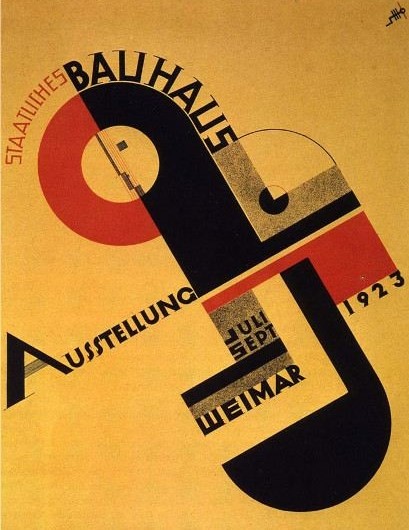
That is why Bauhaus continues to interest me. Not as a style library. Not as a set of shapes, colors, furniture, or posters to reference. Bauhaus matters because it keeps pointing back to a durable idea: design should be shaped by purpose, material, and use.
That idea still has teeth.
In modern product work, we talk about systems, components, accessibility, user journeys, and design tokens. Those are the current expressions of the work, and they matter. But beneath them, the questions are remarkably old:
Those questions are not beginner questions. They are the questions experienced designers keep earning the right to ask more precisely.
Form Should Follow Function
One of the most persistent lessons associated with Bauhaus is that form and function should not be treated as separate concerns. How something looks should be connected to how it works, what it is made from, and what someone needs from it.
That sounds obvious until you sit inside a real project. Business requirements pile up. Stakeholders want one more module. Teams inherit technical constraints. The interface starts carrying the weight of every conversation that has not been resolved.
In digital design, it is easy to make something look designed without making it easier to use. We can add polish, motion, cards, icons, gradients, and clever layouts, but if the user still has to work too hard to understand what matters, the design has not done its job.
The visual layer is not decoration sitting on top of the work. It is one of the ways the product thinks out loud.
A button should look actionable. A heading should orient the page. A layout should reveal relationships. Space should clarify, not just beautify. A design system should not only create consistency; it should make better decisions easier to repeat.
Simplicity Takes Work
There is a kind of simplicity that looks effortless from the outside. A clean page. A clear flow. A short form. A calm screen in a complex system.
Anyone who has worked through a difficult product problem knows that kind of simplicity is rarely where you start. It is where you arrive after enough hard decisions have been made.
It takes conversations. It takes tradeoffs. It takes pushing back on the extra thing someone wants to add "just in case." It takes understanding what the user is actually trying to accomplish, not just what the system is capable of displaying.
That is why I do not think of simplicity as a style. I think of it as evidence.
When an experience feels simple, it usually means someone did the work to decide what mattered most.
Bauhaus design can sometimes look minimal, but the better lesson is not "make everything minimal." The better lesson is to remove what does not serve the purpose. That distinction matters. Minimalism can become a taste. Purposeful simplicity is a discipline.
The Basics Still Do the Heavy Lifting
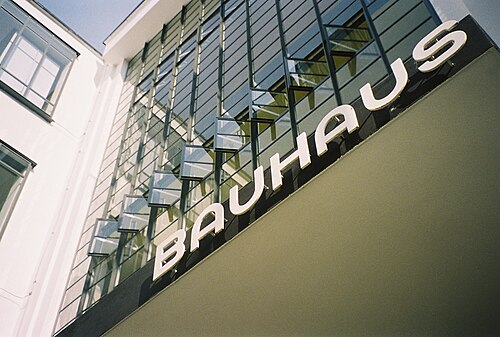

One of the humbling things about a long design career is realizing how often advanced problems still come back to basic design fundamentals.
Type hierarchy. Alignment. Contrast. Space. Proportion. Grouping. Clear language.
These are not old-fashioned concerns. They are not the warm-up exercises before the real work begins. They are the work.
A user may not consciously notice strong alignment or consistent spacing, but they will feel the difference. They will scan more easily. They will understand relationships more quickly. They will have a better sense of what belongs together and what deserves attention.
That is one of the things I appreciate about classic design education. It reminds us that fundamentals are not basic because they are simple to master. They are fundamental because everything else depends on them.
The fundamentals are not what you leave behind when you become experienced. They are what experience keeps sending you back to.
Design Systems Have Bauhaus DNA
The Bauhaus idea of bringing art, craft, and industry together feels closely connected to modern design systems.
A design system is not just a library of components. At its best, it is a shared way of thinking about how a product should work and feel. It creates repeatable patterns so teams do not have to solve the same problem from scratch every time.
That feels very Bauhaus to me: useful form, repeatable logic, craft scaled through a system.
There is a belief underneath it that design should be useful, scalable, and connected to how things are actually made. The designer is not just creating a one-off artifact. The designer is helping shape a system that others can build from.
Of course, systems can become rigid if we are not careful. Consistency is valuable, but consistency without judgment can turn into sameness. A system should help us make better decisions, not keep us from thinking.
The Point Is Not to Copy the Style
When people think of Bauhaus, they may picture geometric shapes, primary colors, clean typography, and modernist furniture. Those things are part of the story, but I do not think the real value is in copying the look.
The value is in the posture: pay attention to purpose, understand the material, respect the user, and let the form earn its place.
Those are still good questions for any designer working today.
Whether we are designing a healthcare workflow, a dashboard, a mobile app, a marketing page, or a portfolio site, the fundamentals still matter. The tools have changed. The screens have changed. The technology keeps changing. AI will change the process again, and probably faster than we expect.
But the need for clarity has not changed much at all.
The longer I work in design, the less interested I am in treating fundamentals as something you graduate from. They are what keep the work honest. They are what help a new tool become useful instead of distracting. They are what remind us that design is not just making things look current. It is making things make sense.